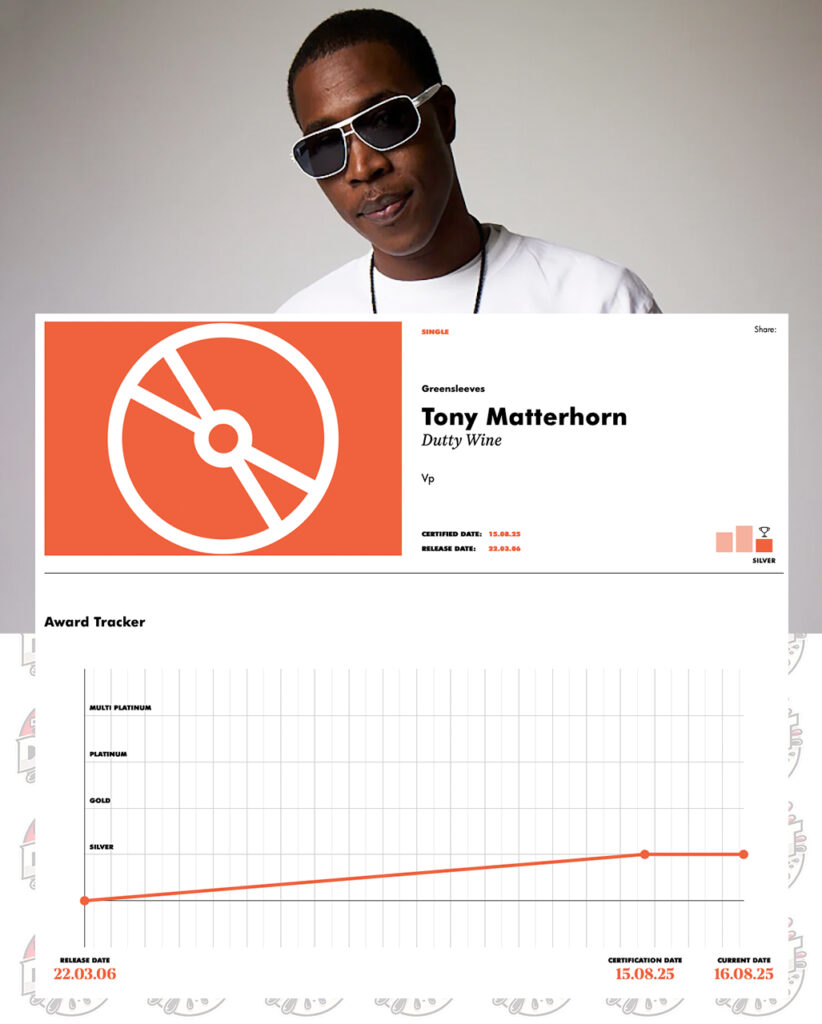






The Dutty Wine has proven that a true dancehall classic never dies. Nearly two decades after dominating the globe, Tony Matterhorn’s 2006 anthem was certified Silver in the United Kingdom on Friday, August 15, by the British Phonographic Industry (BPI), marking more than 200,000 combined sales and streams. The milestone follows renewed interest in the track after VP Records issued a remaster earlier this year, giving fresh life to one of the genre’s most iconic records.
At the height of its popularity, Dutty Wine didn’t just move up the charts—it moved bodies worldwide. The track, which hit No. 24 on Billboard’s Bubbling Under Hot 100 and No. 17 on the Hot Rap Songs chart, was the soundtrack to a dance craze that became synonymous with mid-2000s Dancehall culture. The official video now boasts over 36 million views on YouTube, underscoring its continued cultural relevance nearly 20 years later.
But the story of Dutty Wine is as much about the dance as it is about the song. Originating in Jamaica, the move was performed mostly by young women and featured a rapid rotation of the neck paired with intricate leg, wrist, and hip movements. While several dancers have claimed its creation, Dancehall Queen Mad Michelle points to a 2003 video as proof of her role, while others credit Montego Bay’s Attitude Girls—whose member Shalara Gayle became legendary for performing the fastest and longest Dutty Wine.
By 2006, the dance was everywhere, spreading across North America and the UK, with some hailing it as “the dance craze” of the year. Its daring, high-energy style captured the imagination of fans and cemented its place in dancehall folklore. Yet, its popularity also came with warnings. Doctors at the time cautioned that the intense neck rotations could lead to muscle trauma, ligament damage, and serious injury—adding a layer of controversy to its explosive fame.
Two decades on, the legacy of Dutty Wine remains twofold: a defining dancehall anthem and a cultural movement that pushed Jamaican creativity onto the world stage. From the dancefloor battles in Montego Bay to sold-out parties in London and New York, the song and the dance continue to represent a pivotal moment when Dancehall redefined global party culture.