






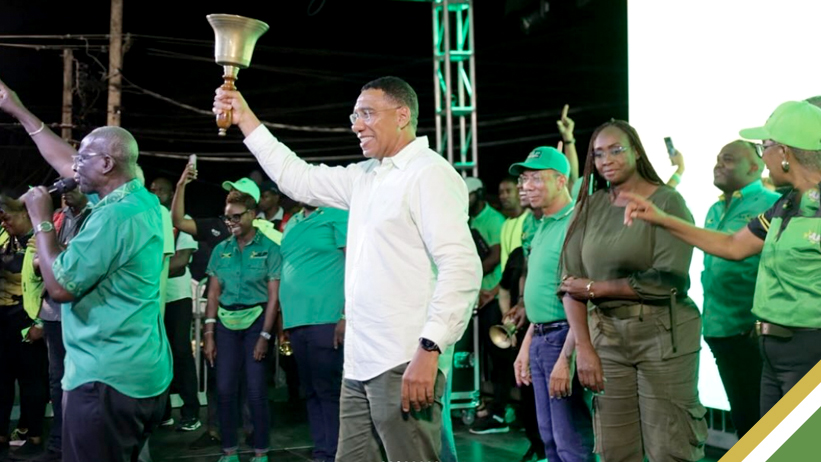

Jamaica’s political landscape shifted dramatically on September 4, 2025, as the island witnessed a historic yet slim victory for the Jamaica Labour Party (JLP). Prime Minister Andrew Holness secured a third consecutive term, the first JLP leader ever to do so and only the second in the nation’s history after PJ Patterson. But the triumph came with caveats: the JLP’s win of 34 seats was just enough to edge out the resurgent People’s National Party (PNP), which stormed back from political obscurity to capture 29 seats in one of the closest contests in recent memory.
The election wasn’t just about numbers; it was about resurgence and resilience. The PNP, under Opposition Leader Mark Golding, more than doubled its parliamentary presence compared to the 2020 elections. Golding, who cruised to a landslide in his own Southern St. Andrew constituency, told supporters, “The PNP is alive and well as a powerful political organisation that has embraced modernity … and has, over the last few years, come a long way towards being a competitive political force in Jamaica.” His words reflected not only a concession but also a rallying cry for the future.
Still, the vote exposed troubling trends. Voter turnout stood at just 39.5%, a marginal improvement from the COVID-marred 2020 polls but still far below historical levels. Analysts warn this persistent apathy underscores growing disillusionment, despite fiery debates on corruption, citizenship, and Jamaica’s economic path. Even so, long lines at some polling stations showed that many Jamaicans were still willing to brave the heat to make their voices heard.
The results also produced unexpected twists. Ann-Marie “Action Ann” Vaz, once considered a JLP rising star, lost her Portland Eastern seat to newcomer Isat Buchanan of the PNP by fewer than 200 votes. Meanwhile, PNP veterans like Phillip Paulwell, Anthony Hylton, and Fitz Jackson held their ground, reinforcing the party’s revitalization. On the government’s side, key figures including Dr. Christopher Tufton, Fayval Williams, and Daryl Vaz retained their constituencies, ensuring the JLP still has a core of experienced ministers.
In the end, Jamaicans at home and abroad are left with a sense that 2025 was not just another election—it was a referendum on the country’s direction. Holness may have made history, but Golding and the PNP have injected new energy into a two-party system many had written off as stagnant. As the dust settles, one thing is certain: Jamaica’s political stage has rarely looked more competitive, or more uncertain, than it does now.
View this post on Instagram